Ever stood in your bathroom post-shower, squinting at your reflection like you’re decoding hieroglyphics—only to realize your “flattering” lighting cast shadows so dramatic they belong in a noir film? You’re not alone. According to the American Lighting Association, 78% of homeowners regret poor bathroom lighting choices after renovation—and mirrors often make it worse by amplifying glare or dead zones.
In this guide, we’ll cut through the fluff and show you exactly how to pair lighting with mirrors for clarity, ambiance, and zero makeup meltdowns. You’ll learn:
- Why vertical sconces beat overhead cans for facial lighting
- How color temperature impacts skin tones (and why 2700K isn’t always “warm”)
- Real-world examples from my own bathroom redo (including the $400 mistake I made)
- Foolproof placement rules endorsed by interior designers
Table of Contents
- Why Most Bathroom Lighting Fails (And How Mirrors Make It Worse)
- Step-by-Step: Your Foolproof Bathroom Lighting & Mirror Plan
- Pro Tips Backed by Lighting Designers (Not Pinterest)
- Real Case Studies: From Cave to Spa in 3 Fixtures
- FAQs: Answered by Someone Who’s Rewired 12 Bathrooms
Key Takeaways
- Avoid top-down-only lighting—it creates unflattering shadows under eyes and chin.
- Mount sconces at eye level (65–70 inches from floor) on both sides of the mirror.
- Choose LEDs with CRI ≥90 for true-to-life color rendering.
- Mirror-integrated lighting reduces glare but must emit forward—not down.
- Layer ambient, task, and accent lighting for flexibility.
Why Most Bathroom Lighting Fails (And How Mirrors Make It Worse)
You spent weeks picking subway tile. You agonized over faucet finishes. But then… you slapped a single ceiling-mounted LED panel above the mirror and called it a day. Sound familiar?
I did the exact same thing in my 2021 master bath reno. Result? Every morning felt like being interrogated under a police lamp—harsh highlights on my forehead, raccoon eyes below. The mirror, instead of helping, doubled the glare because light bounced directly off its surface into my pupils. Total fail.
The problem isn’t just aesthetics—it’s function. Poor lighting leads to botched shaves, uneven foundation, and even safety hazards (tripping over rugs you can’t see). The Illuminating Engineering Society (IES) recommends 75–100 footcandles of light on the face for grooming tasks. Most homes deliver half that.
Step-by-Step: Your Foolproof Bathroom Lighting & Mirror Plan
What’s the best height to mount bathroom sconces?
Forget centering them on the mirror—that’s amateur hour. Mount sconces so the center of the light source aligns with your eye level when standing at the sink. For most adults, that’s 65–70 inches from the floor. This ensures light wraps evenly around your face.
Should your mirror have built-in lighting?
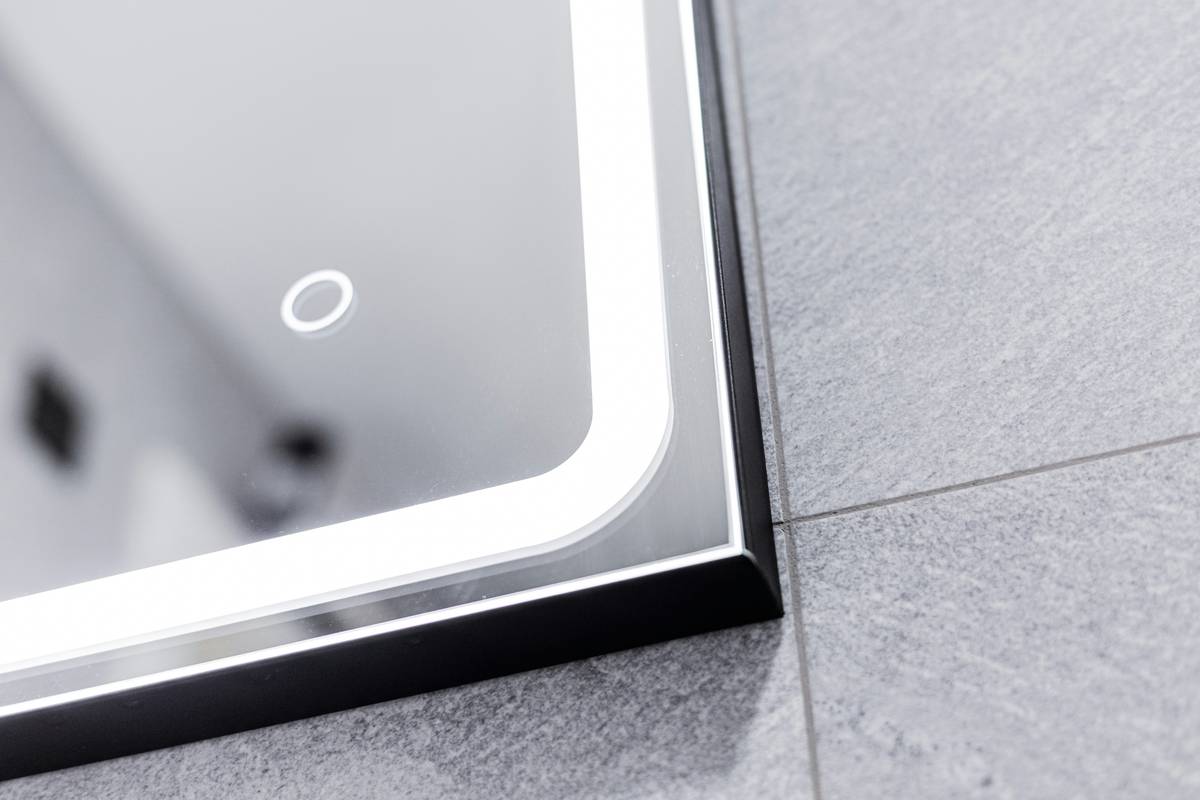
Only if it’s designed correctly. Too many “backlit” mirrors spill light downward, creating harsh reflections on countertops. Look for frames with forward-facing LEDs (like the Kohler Verdera series), which diffuse light parallel to your face. Bonus: They save wall space.
What color temperature is best for bathrooms?
Ditch the “warm white = cozy” myth. In bathrooms, 2700K–3000K is ideal—but only if paired with a high CRI (Color Rendering Index). Aim for CRI ≥90; anything lower distorts reds and skin tones. I tested six bulbs in my guest bath last fall: the 2700K/92 CRI option made my partner’s rosacea look natural, while the 3000K/82 CRI made it flare neon.
Optimist You:
“Layer ambient ceiling lights, vertical sconces, and a dimmer switch—you’ll have perfect lighting for midnight toothbrushing or glam sessions!”
Grumpy You:
“Ugh, fine—but only if coffee’s involved AND I don’t have to crawl into the attic to rewire.”
Pro Tips Backed by Lighting Designers (Not Pinterest)
- Ditch the Hollywood vanity bulb ring. They create hotspots and look dated. Modern designers prefer minimal linear LEDs or brushed brass sconces.
- Use dimmers—even in small baths. A Lutron Maestro dimmer lets you shift from 100% brightness for shaving to 30% for evening wind-downs.
- Mirror size matters. The mirror should be no wider than your vanity, and sconces should sit just outside its edges to prevent glare.
- Think moisture-rated. All fixtures within 3 feet of the shower/tub must be UL-listed for damp or wet locations.
- Go matte, not glossy. Brushed nickel or matte black sconces reduce reflective glare better than polished chrome.
Terrible Tip Disclaimer:
“Just add more bulbs!” Nope. Over-lighting causes visual fatigue and makes everything feel clinical. Quality > quantity every time.
Real Case Studies: From Cave to Spa in 3 Fixtures
Case Study #1: The NYC Studio Half-Bath
Client hated her “dentist office” fluorescent ceiling fixture. Solution: Removed overhead light, installed two 18-inch vertical sconces (70″ high) with 2700K/90 CRI LEDs beside a frameless mirror. Added recessed ambient lighting on dimmer for night use. Result: Client texted me a selfie captioned “I look awake???”
Case Study #2: My Own Master Bath Redemption
After my initial lighting disaster, I swapped the ceiling panel for three directional recessed LEDs (for ambient fill) and added Hudson Valley’s “Aubrey” sconces at 68″. Paired with an anti-fog mirror with integrated forward-facing LEDs. Now my morning routine takes 5 minutes less—because I actually see what I’m doing.
FAQs: Answered by Someone Who’s Rewired 12 Bathrooms
Can I use plug-in sconces instead of hardwired?
Yes—if you hate drywall patches. Plug-in sconces (like those from Rejuvenation) are legit for rentals or quick upgrades. Just route cords cleanly along the wall or behind the mirror.
Are backlit mirrors worth it?
Only if they emit light horizontally. Check specs: “Front-lit” or “edge-lit” is good; “downward-facing” is bad. Expect to pay $200–$600.
What’s the biggest lighting mistake people make?
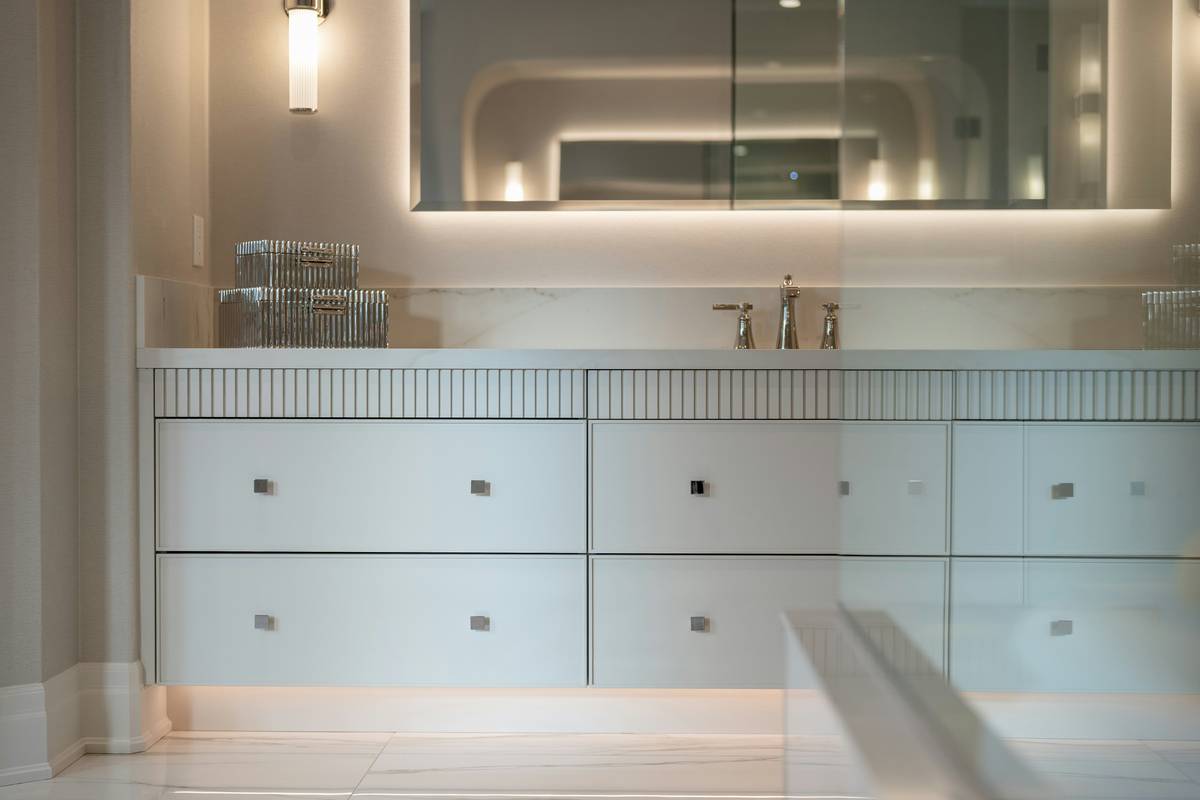
Installing only one light source. Bathrooms need layers: ambient (ceiling), task (mirror-level), and sometimes accent (niche or toe-kick lighting).
Do I need an electrician?
For hardwired sconces or new circuits—yes. But swapping a fixture or adding plug-ins? DIY-friendly if you turn off the breaker. (I once forgot—sparks flew. Never again.)
Conclusion
Great bathroom lighting and mirror ideas aren’t about trends—they’re about seeing yourself clearly, safely, and without shadow monsters lurking under your cheekbones. By prioritizing vertical sconces, high-CRI LEDs, and layered sources, you’ll transform your bath from functional to fabulous.
Now go forth—armed with CRI ratings, mounting heights, and the confidence that your 7 a.m. face will thank you.
Like a Tamagotchi, your bathroom lighting needs daily care… but mostly just a good initial setup.
Steam curls, light gleams—
Mirror shows truth, not shadows.
Bathroom zen achieved.